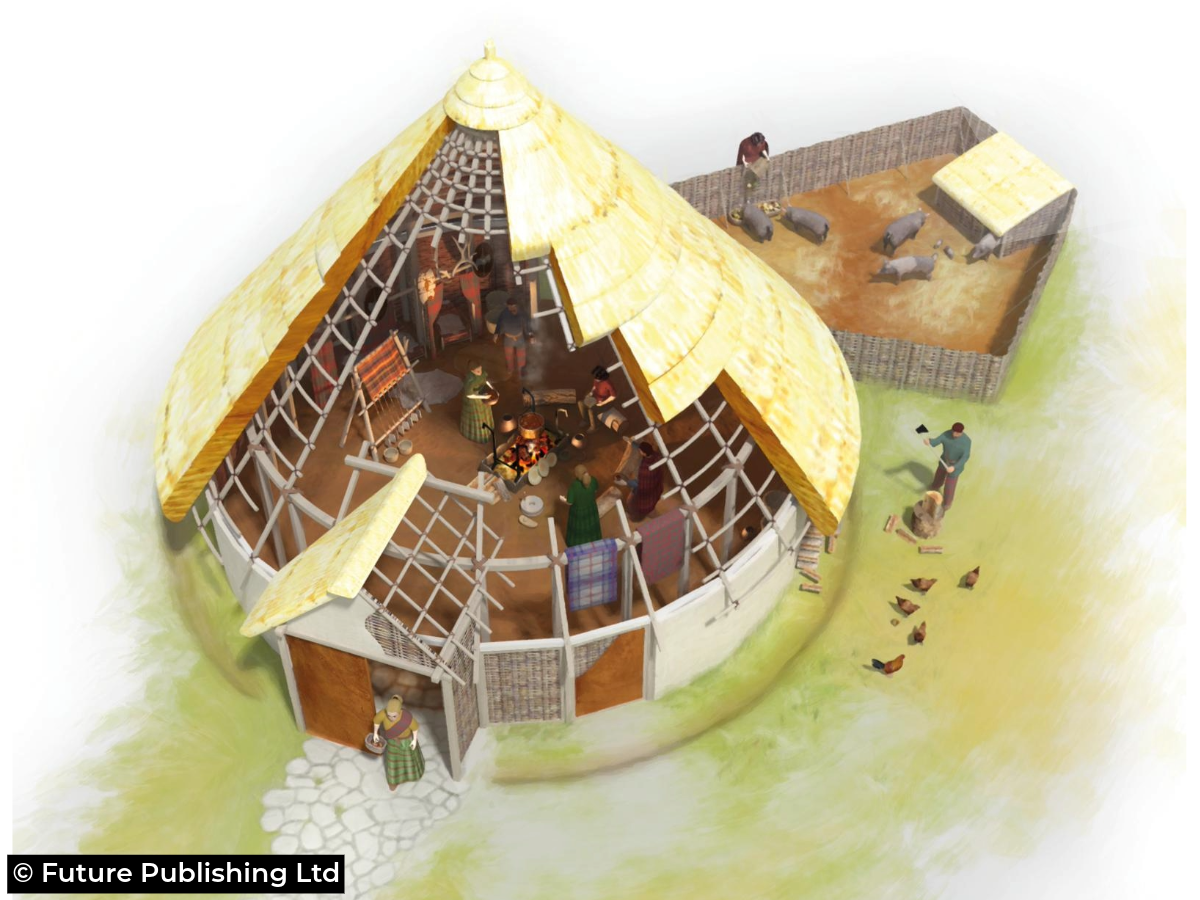
While much remains unknown about these Iron Age homes, archeologists have slowly been piecing together the mystery of how Celtic tribes lived.
The Celts of Iron Age Britain lived in fortified settlements, surrounded by banks and ditches, known as hillforts. The large communities who lived in hillforts had simple homes called roundhouses, circular structures with only one room. As these buildings were constructed out of wood and straw, 2-3,000 years ago, little has remained. As such there are many aspects of roundhouses that historians can only speculate about, but thanks to archaeological excavations, we do now have some understanding of what they may have looked like.
The walls were constructed first out of wattle and then covered with daub, made from straw, soil, manure and clay, which was dried until it became hard, acting as a primitive form of waterproof covering. It is assumed that there was a sleeping area in the roundhouse and the beds were probably raised from the ground on wooden bases, with hay mattresses and animal skins or wool blankets for warmth.
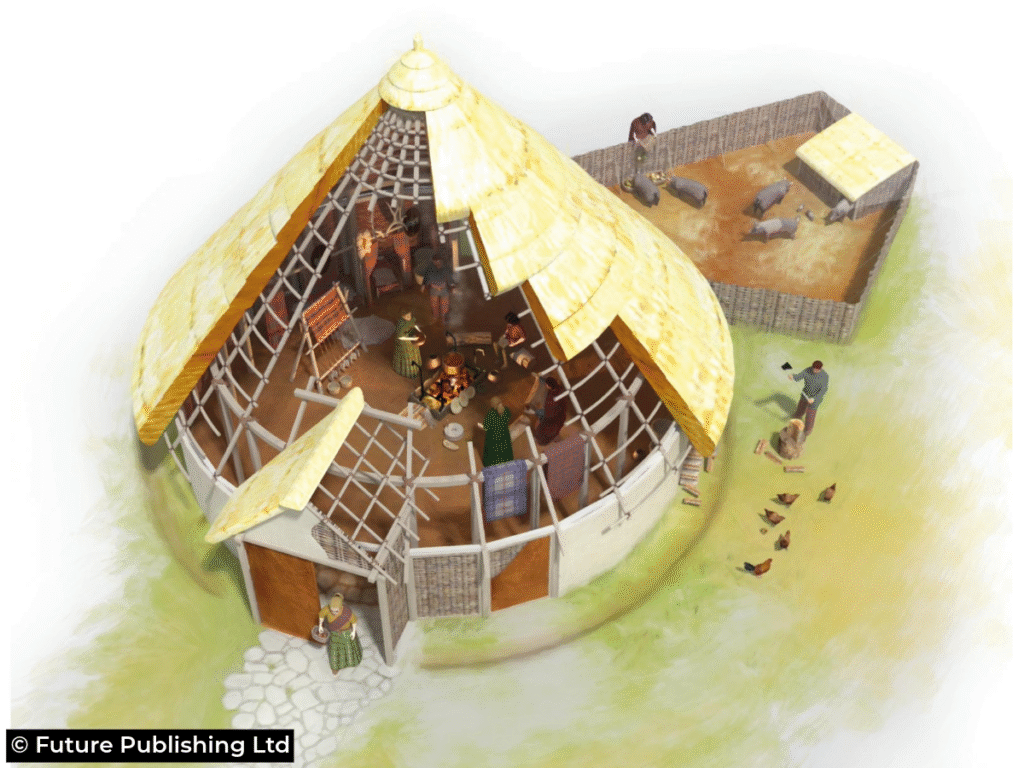
The roof was most likely thatched with river reed and it had to be steep to allow water to run down. Most of the light in the roundhouse during the day came through the doorway and it is likely that many menial tasks were completed here. A fire was kept burning all day and night, the smoke escaping through a hole in the roof. However, it was far more practical to use natural daylight whenever possible and so the Celts always awoke when the sun rose to begin work.
The most famous hillfort in Britain is Castell Henllys in Wales, which was once home to the Demetae tribe. Since the early 1980’s, archaeologists have been excavating the site, where they have discovered everyday items such as glass beads, charcoal and pieces of pottery, giving us valuable insight into ordinary Celtic life.
Based on archaeological evidence, three roundhouses – including one that would have belonged to the tribe chieftain – have been reconstructed at Castell Henllys, just as they would have stood 2,000 years ago. The first one to be built, known as Roundhouse One, was reconstructed in 1982 and is built upon the foundations of the original. With a diameter of 10m, today, it remains the longest-standing roundhouse reconstruction in Britain.
The All About History Archive contains more than 600 images like the one above and hundreds of accompanying features examining world history from ancient Egypt to the Cold War. More assets and articles are being added all the time. To search and purchase images directly from the Image Archive, please register here.
Callum McKelvie is features editor for All About History magazine. He has a both a Bachelor and Master’s degree in History and Media History from Aberystwyth University. He has previously worked as an Editorial Assistant publishing digital versions of historical documents.
Subscribe to
All About History now for amazing savings!

Follow All About History on…