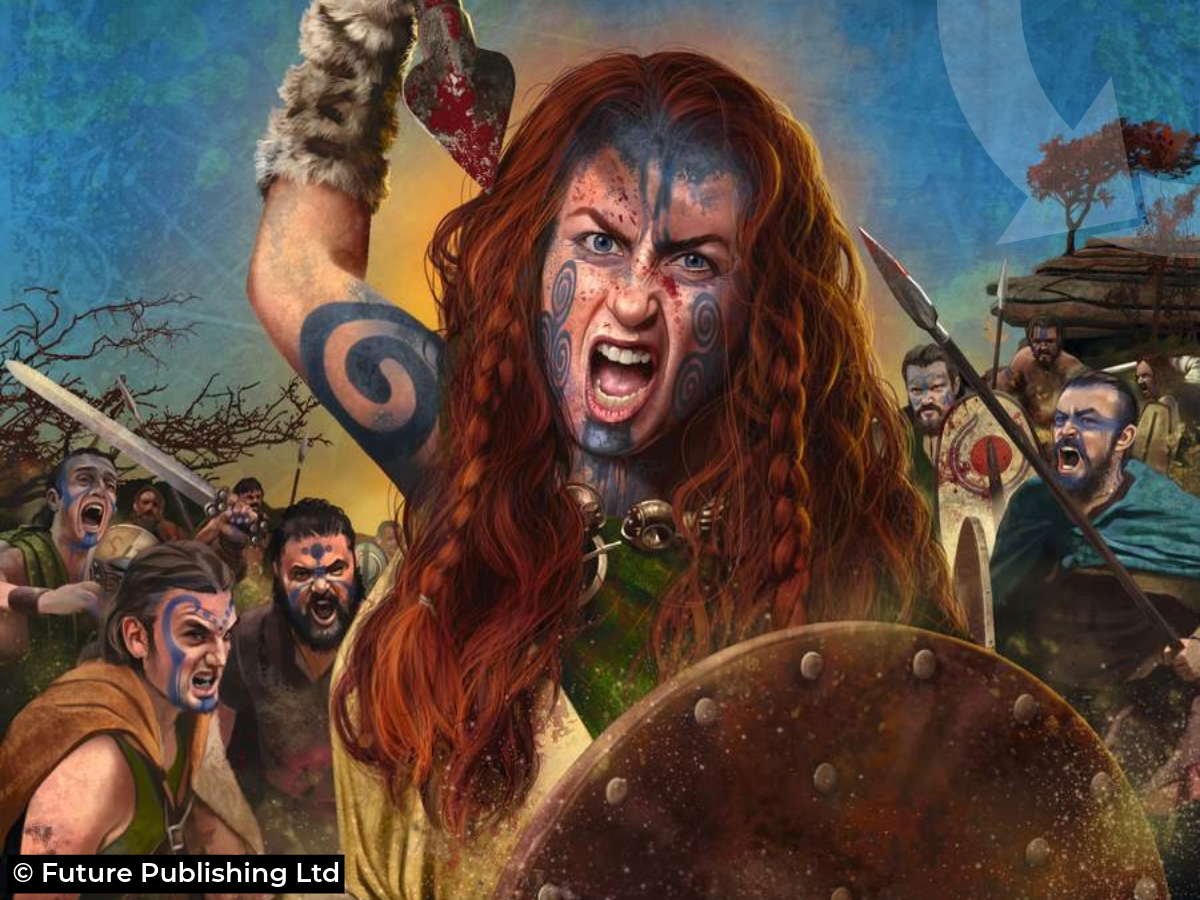
The Celtic queen headed a fearsome rebellion which challenged the Romans in Britain and secured her place as a national icon
There are few figures in ancient British history that inspire as much respect and admiration as Boudicca. As a female tribe leader, she fearlessly faced the forces of Ancient Rome, defending the rights of her people and avenging the atrocities committed by the Romans against her community.
The earliest accounts of Boudicca, whose name has also been written as Boudica, Boudicea and Boadicea, identify her in the year 43 CE as the wife of King Prasutagus of the Celtic Iceni tribe who inhabited the area of East Anglia in Ancient Britain. As queen of the Iceni tribe, Boudicca’s rule seems to have been of little consequence until her husband’s death in either 60 or 61 CE. Upon his death, the crown of the Iceni passed to Prasutagus’ heirs: his two daughters and Roman Emperor Nero, the latter of whom the king had named in an effort to placate the Romans and prevent them from seizing Iceni land. But Prasutagus’ ploy did not work, and soon Roman forces invaded Iceni territory.
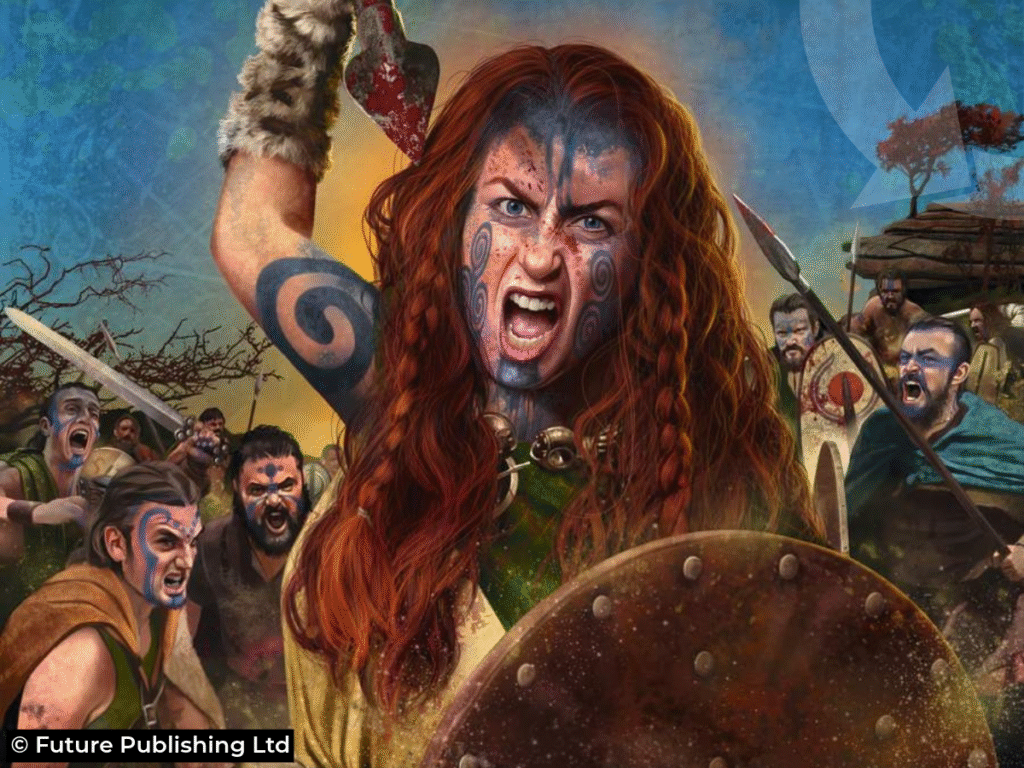
In a brutal incursion, the Iceni people were cruelly oppressed by the Romans. The widowed Queen Boudicca and her daughters were humiliated and attacked, with Boudicca flogged in public and her children raped by Roman soldiers. The Romans likely believed they had been successful in their mission to take the Iceni land, but Boudicca proved to be a force to be reckoned with. Furious at the evils that had been done to her family and her people, she raised a mighty rebellion to take revenge on the Romans and reclaim her territory. In her revolt she was joined by other Celtic tribes and, with an army that has been estimated by historians to have numbered between 100,000 and 240,000 people, they faced the might of Rome.
In three engagements at London, St Albans and Colchester, the Britons, led by Boudicca, emerged victorious over the Romans, allegedly killing up to 70,000 highly trained Roman soldiers and Roman-supporting Britons. However in a final battle in 61 CE, which is believed to have taken place in the Midlands, Boudicca’s forces were outmanoeuvred by the strategic 14th Legion and wider Roman army and suffered a devastating defeat. Instead of being captured and killed by her enemy, Boudicca famously decided instead to take her own life by drinking poison.
Despite her crusade against the Romans, it is thanks to Roman historians that Boudicca’s memory has been preserved. The details of her brave and effective rebellion was preserved in the works of historians Cassius Dio and Tacitus, and later archaeological finds have corroborated much of what we know about Boudicca’s revolt from these sources. In later centuries, the legacy of the formidable warrior queen inspired other great women in history. Tudor queen Elizabeth I invoked Boudicca’s story to consolidate her throne as a female monarch and remind her detractors that women could make for skilled and capable leaders. The Suffragette movement also adopted the image of Boudicca as an icon of female strength and power while fighting for women’s rights to vote in the 1900s. Despite its ultimately unsuccessful outcome, Boudicca’s rebellion has been held up as a stirring example of female leadership for nearly 2,000 years.
The All About History Archive contains more than 600 images like the one above and hundreds of accompanying features examining world history from ancient Egypt to the Cold War. More assets and articles are being added all the time. To search and purchase images directly from the Image Archive, please register here.

Emily is the Staff Writer at All About History magazine, writing and researching for the magazine’s content. She has a Bachelor of Arts degree in History from the University of York and a Master of Arts degree in Journalism from the University of Sheffield. Her historical interests include Early Modern and Renaissance Europe, women’s history and the history of popular culture.
Subscribe to
All About History now for amazing savings!

Follow All About History on…