Public historian and star of the hit BBC podcast You’re Dead To Me, Greg Jenner talks at York’s Eboracum Roman Festival about his children’s books, his career, the importance of history and the significance of York as a historic city
You have written a number of history books for different age groups, including the Totally Chaotic History series for children. What is the difference for you between writing history books for adults and writing for children?
It’s not that different. The joy of writing for kids is I get to be sillier. When I write for adults I try to be humorous but the sillier you are, the more people are off put in adult writing. I’ve never met a child who has said: “you should take this more seriously!” I get to be both a historian and also a comedy writer. With children, you’re often introducing things to them for the first time so there is a sort of introductory element where you have to explain basic concepts, but that’s fine because you’re just making sure that they understand everything.
Kids are amazingly bright and they’re so switched on and curious and as long as you introduce the basic elements you can usually build on that very quickly and one or two pages later you can be doing quite complicated, quite sophisticated history for them. In my books I use technical words and Latin names. In the Stone Age book, we used archaeological terms and explained what DNA is and how isotopic analysis works. You don’t have to dumb down at all for kids, you just have to make sure that it’s accessible for them and that they’re supported and that it’s fun for them. So there’s not really an obvious difference other than I think they allow me to be a bit sillier.
How important do you think it is to encourage children’s interest in history from a young age?
(Source: Wiki/Poliphilo)

I think it’s crucial. I was obsessed with Asterix in my childhood and I know so many historians whose first love was Asterix. The Asterix [comics] are really funny, so that’s how I first loved histories. I loved it through jokes and I think it’s really sad if you lose kids to history so young because I think it’s really hard to get them back. A huge number of people who listen to my podcast (You’re Dead to Me) come up to me and say they hated history at school but they got back into it because of the podcast. On the one hand it’s nice to hear because I’m glad that the podcast is useful and it’s bringing people back but it’s also really sad because it means that for 20 or 30 years these people were disengaged with history.
As we know, history is important. It’s relevant and it helps us understand the world, but also it’s fascinating. It’s interesting in its own right. It’s not just that didactic thing that we should know. History is joyful. And yes there are the sad stories and war and plagues and horrible people doing horrible things, but it’s also the story of humans and people and it can help us. I think studying history makes us more empathetic. I think it makes us a better society if we all know more about the world and know more about the human experience.
So, I think it’s really crucial that we give kids a way of accessing history so that they grow up familiar with the past, familiar with other cultures, familiar with how time works, but also familiar with how sources work, how evidence works and how critical thinking works. It’s not just teaching them facts, but teaching them how to think like historians. That will, I think, hopefully help them with the world that we live in now, with AI, misinformation, social media and deep fake images. If you can train kids to spot stuff that’s fake and if they can learn to sift out reliable places of information from dodgy places of information, hopefully it’ll be safer and our society and civilisation will be safer. I think we should be training kids to be historians at a young age. I think it’s good for society, but from a human level I just want them to enjoy it and that’s why, for me, [writing] jokes and making it fun and making it feel like it belongs to them is really important. It needs to feel not boring and dry and stuffy. It needs to feel like a playground where they get to experience stuff and experiment and learn things.
“If you can train kids to spot stuff that’s fake… hopefully it’ll be safer and our society and civilisation will be safer”
How important are festivals, like York’s Eboracum Festival and Living History Weekend, for engaging children in the past?
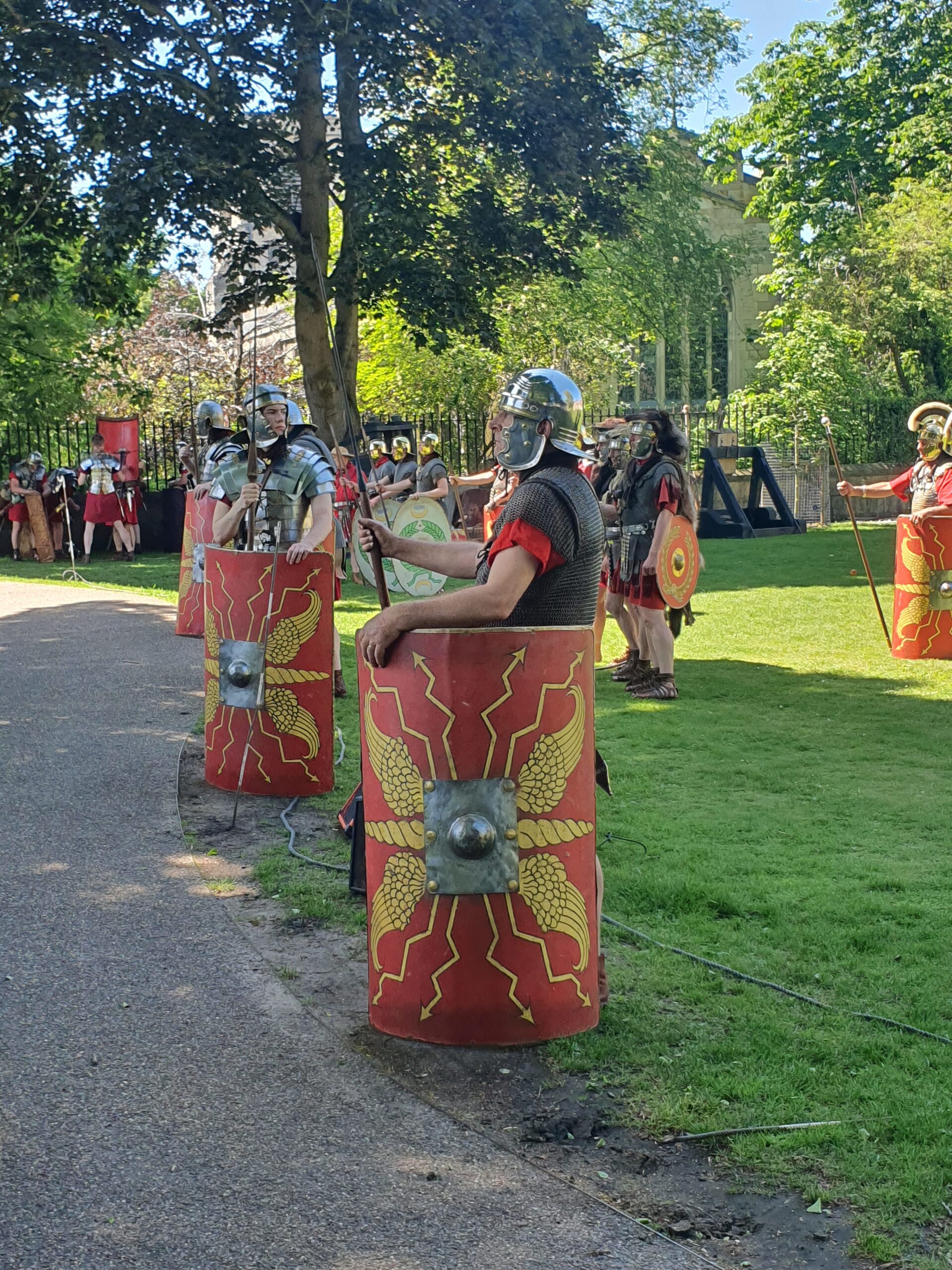
Mary Beard will tell you that her first experience of history was going to the British Museum and falling in love with an object in a case. Living history is wonderful because you get the tactility of clothing and costume; of object handling; of seeing people marching around in legionary costumes or civil war costumes or dressing up as Victorians and Tudors. That’s fantastic because it fires the imagination. It allows kids to experience [history] and question what did this stuff feel like? What did the food taste like? What did people smell like? Hopefully they’ve washed but maybe not!
But I think places like this are so important because they feel like safe spaces for play and for learning simultaneously. It should be fun. It should be a day out. It should be something kids look forward to. It should be something they drag their parents to, not the other way around. I love doing these sorts of things because if they’re done well you begin a journey for children that will last a lifetime. If you can get them at seven or eight to think about history then you set them on a course that might lead to maybe a GCSE, maybe doing an A level, maybe studying at university and perhaps, if you’re really lucky, becoming a professional historian. The most important thing is that they engage with history and they realise it’s for them. It begins a lifelong curiosity, which can be just a hobby but that’s all it needs to be. If it becomes a hobby, it means that they are at least engaged with that historical world and they’re thinking, reading, listening to podcasts, video gaming, playing board games. There’s all sorts of ways to engage with the past and I think it’s crucial that we [encourage] this stuff.
(Source: Emily Staniforth)
How important to your career as a historian has it been to diversify across different mediums?
Hugely important. I started in TV documentaries and then I went into historical dramas and then historical comedy with [the BBC series] Horrible Histories, which I did for 11 years. While doing that show I also did an online game which was a new experience for me. Then we did the Horrible Histories movie so I was doing film. Then I became a TV presenter and I ended up on radio, and now I’m doing a podcast. Then I became a children’s author so I’m about 10 careers down. They’re all history but they’re all really different from each other. These different sectors all have their own rhythms, their own pressures and their own major financial and budgetary concerns. Your audiences expect different things of you. Your audiences also change in age range, of course.
I’m always learning and the lovely thing about it is that I’m always able to bring the experiences of the previous careers into the new career, so I’m always sort of hopping sideways. But I’m always growing my skill set rather than having to learn things from scratch. The comedy writing for Horrible Histories has hugely influenced my book writing, even though it’s quite different when you write comedy sketches, which are really short and can’t last more than three minutes, to when you’re writing a book and it’s 25,000 words for kids and 120,000 words for adults. It’s a very different skill but that ability to write initially taught me how to write long form and then that taught me how to podcast and present information across an hour or so. They’re all mutually enforcing, but each career is different from the last one. I’m very lucky to have this weird CV.
Was your plan always to be a historian when you finished studying at university?
The plan was always to do a PhD and be an academic. That was plan A. Now I’m on plan K, maybe. When I went into telly and documentaries I just thought I’d be a documentary producer. I never thought I’d be on camera. I never thought I would ever be a public historian. I was terrified of public speaking and I used to get so nervous. The first time I was on stage, I forgot my own name. I was so scared, and now I love it. Now it’s the best part of my job but I never thought I would be, what they call, “talent”. When I was at university, podcasts didn’t even exist! I just wanted to keep doing history. That was my plan. I’ve had to roll with the punches a bit because the landscape has changed so much now. When I first started, TV was the biggest audience possible. You’d get two and a half to three million people watching a BBC documentary. Now, the biggest audience possible comes from video games and podcasts and social media.
“York is the perfect embodiment of pretty much all of British history squished together”
You studied history and archaeology at the University of York. Why is York so special for history enthusiasts?
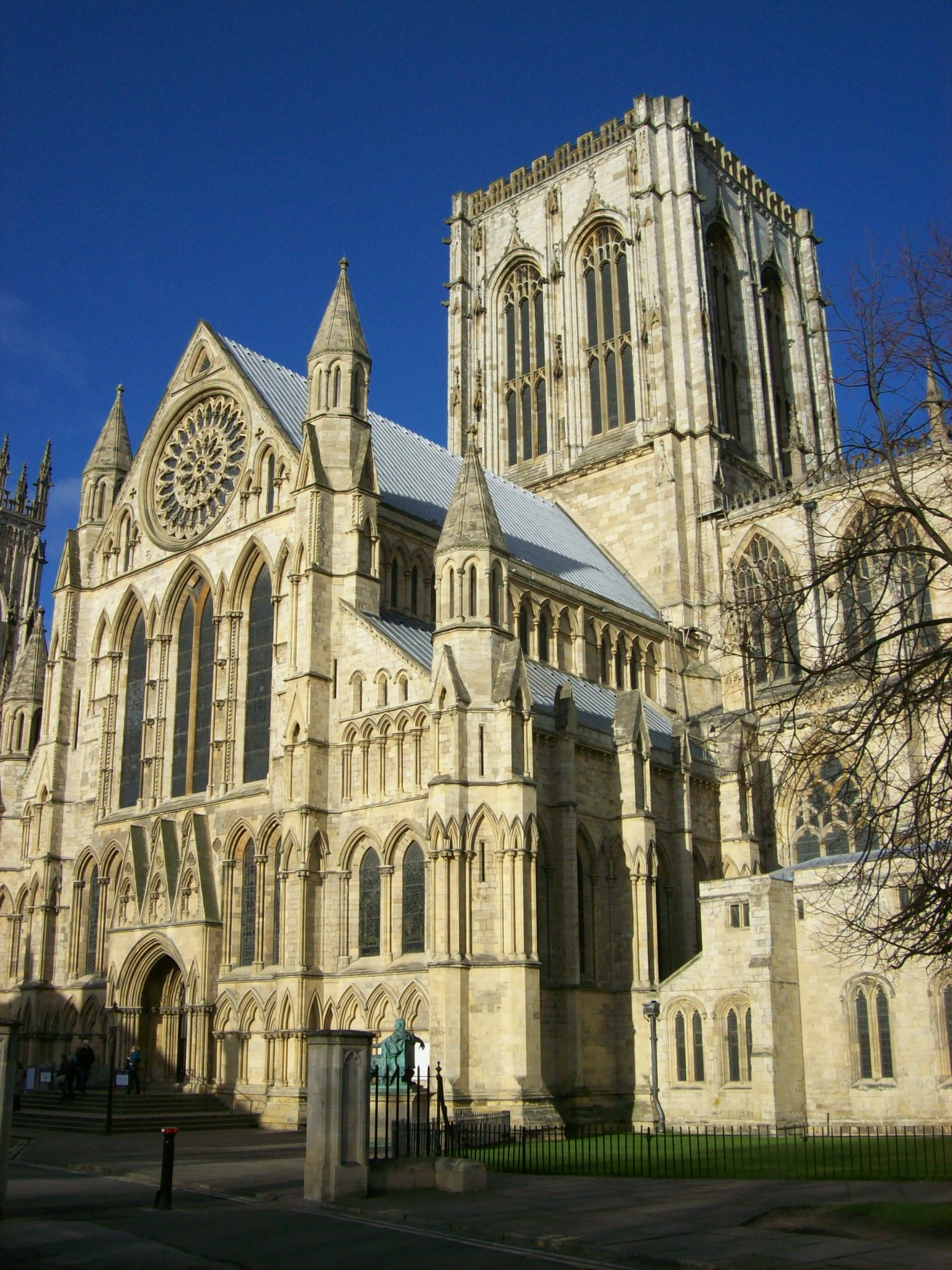
York is the perfect embodiment of pretty much all of British history squished together. It’s founded by the Romans who think it is a good spot for a fortress. That turns into a town and evolves and grows. Then the Vikings come along and the town becomes Jorvik. Then York becomes a power base in medieval world government in the 15th and 16th centuries and then you get the Industrial Revolution. York produces chocolate and becomes a chocolate town. I love chocolate – that was one of the reasons I wanted to be here! The city itself is still so very medieval. It wasn’t devastated by bombing in World War Two, though bombs fell and churches were damaged.
So many of the gorgeous and historic buildings and streets are just there and you just feel the history. You can walk along and go to the Minster or the Shambles. You can go to the Jorvik Centre or the Castle Museum. You can go to all these incredible sights and you just feel like you’re stepping back in time. As a history and archaeology student, you’re walking past history on a daily basis. Your bus takes you past stuff that’s centuries old or Roman walls that are about 1800 years old. It’s an amazing thing! When American tourists come here they lose their minds because their country is 250 years old and most of our houses are [the same age]. I loved being a student here. Also the people of York are brilliant. It’s such a lovely, warm city. The people are fantastic. I was quite a shy, nervous teenager and York was the perfect place for me because I got to grow here and get my confidence. My career happened because of everything I learned at York. I’m incredibly grateful to the university and to the people of the city and that’s why I consider it my second home. I get to come back every year to teach and do events like this. [York] is where I grew up. It’s my transformation city.
What current projects are you working on?
My next children’s book will be out next year and that’s about ancient Greece. It’s the fourth in the series of the Totally Chaotic books. I’m just starting work on a brand new adult book that will take three years to write. I’m afraid it won’t be coming out anytime soon. I also do the BBC podcast called You’re Dead to Me, which is a history and comedy show, and that’s really good fun. Every episode’s a different subject with a different expert and a different comedian and I’m the host. We do two series a year so I’m making those right now. I’m always interested in the next thing and public history is about constantly paying attention to what’s going on. As well as doing all these projects, I see what people are interested in and do these live events. I’m incredibly grateful to be invited to this wonderful festival and I tend to do events here at the museum quite often. Part of the joy [of the job] is being invited to different places, different cities, different towns and going and learning about their local history and doing talks and listening to people. I’m very lucky. It’s a pretty happy life.
The Eboracum Roman Festival in York continues across the city until 31 May 2026. Visit York Museums Trust for more information.
Emily is the Staff Writer at All About History magazine, writing and researching for the magazine’s content. She has a Bachelor of Arts degree in History from the University of York and a Master of Arts degree in Journalism from the University of Sheffield. Her historical interests include Early Modern and Renaissance Europe, women’s history and the history of popular culture.
Subscribe to
All About History now for amazing savings!
Follow All About History on…