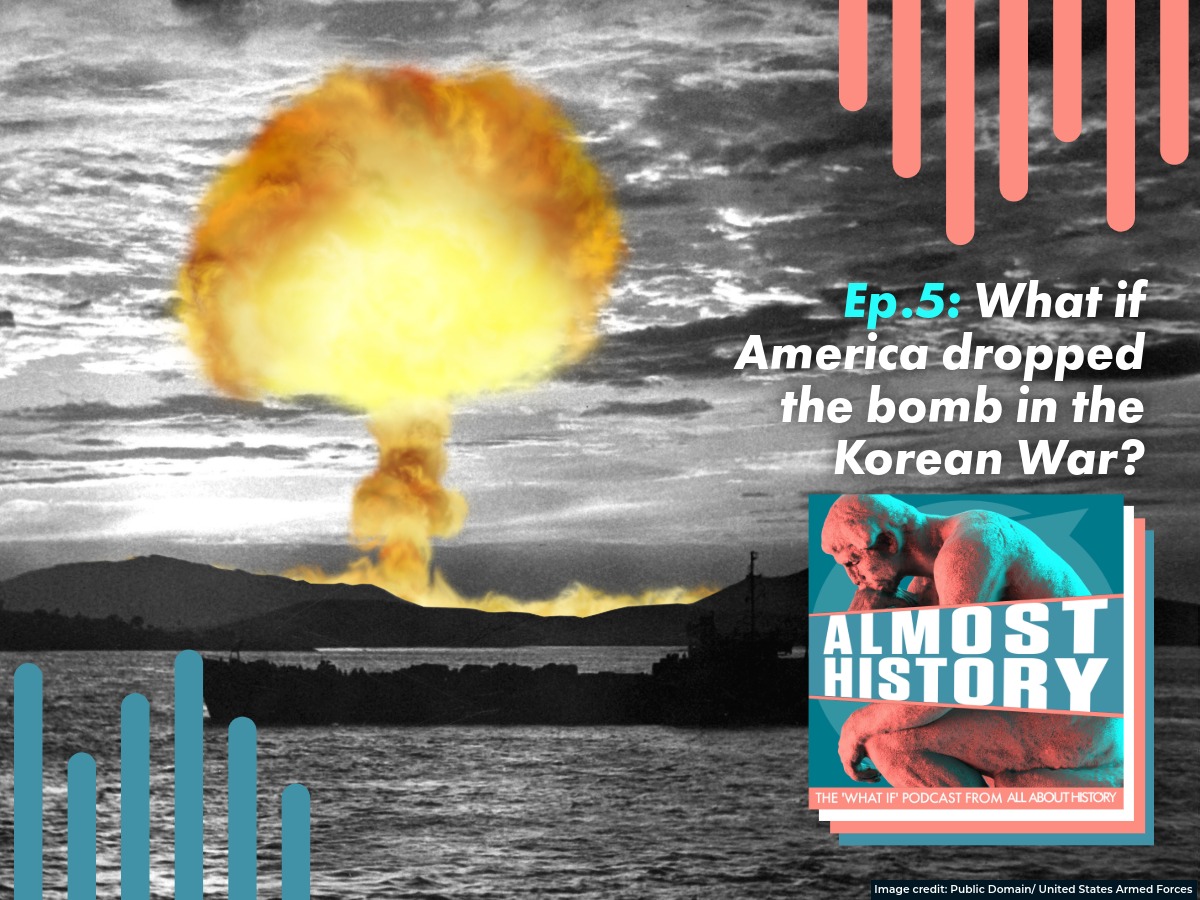
Fifth episode of new ‘What If?’ podcast from All About History available now – Subscribe today on your preferred podcast player
On 6 and 8 August 1945 the United States Army Air Force dropped atomic bombs on Hiroshima and Nagasaki, Japan, respectively. These were the first and only uses of atomic weapons in a war. The devastating and incomparable power of these weapons led to Japan surrendering and brought the Pacific theatre of WWII to an end. But less than five years later, the US found itself at war in the Pacific region once again as part of the UN’s first intervention in a conflict in Korea. So, why wasn’t the A-bomb used in this conflict?
Nuclear weapons quickly moved from being a weapon of war to purely being a deterrent against aggression. What role did the Korean War have in that shift. Could President Harry S Truman, who had authorised their use in Japan, have done the same again? What would that have meant for the use of these destructive weapons going forward? Would it have made the USSR more likely to deploy their weapons in the future?
Getting to the bottom of these questions and the consequences of them, the All About History team spoke with historian Alex Wellerstein, author of books such as The Most Awful Responsibility: Truman and the Secret Struggle for Control of the Atomic Age. You can listen to our conversation now in episode 5 of Almost History: The What If Podcast from All About History.
Download and Subscribe today from your preferred podcast platform:



Subscribe to
All About History now for amazing savings!

Follow All About History on…