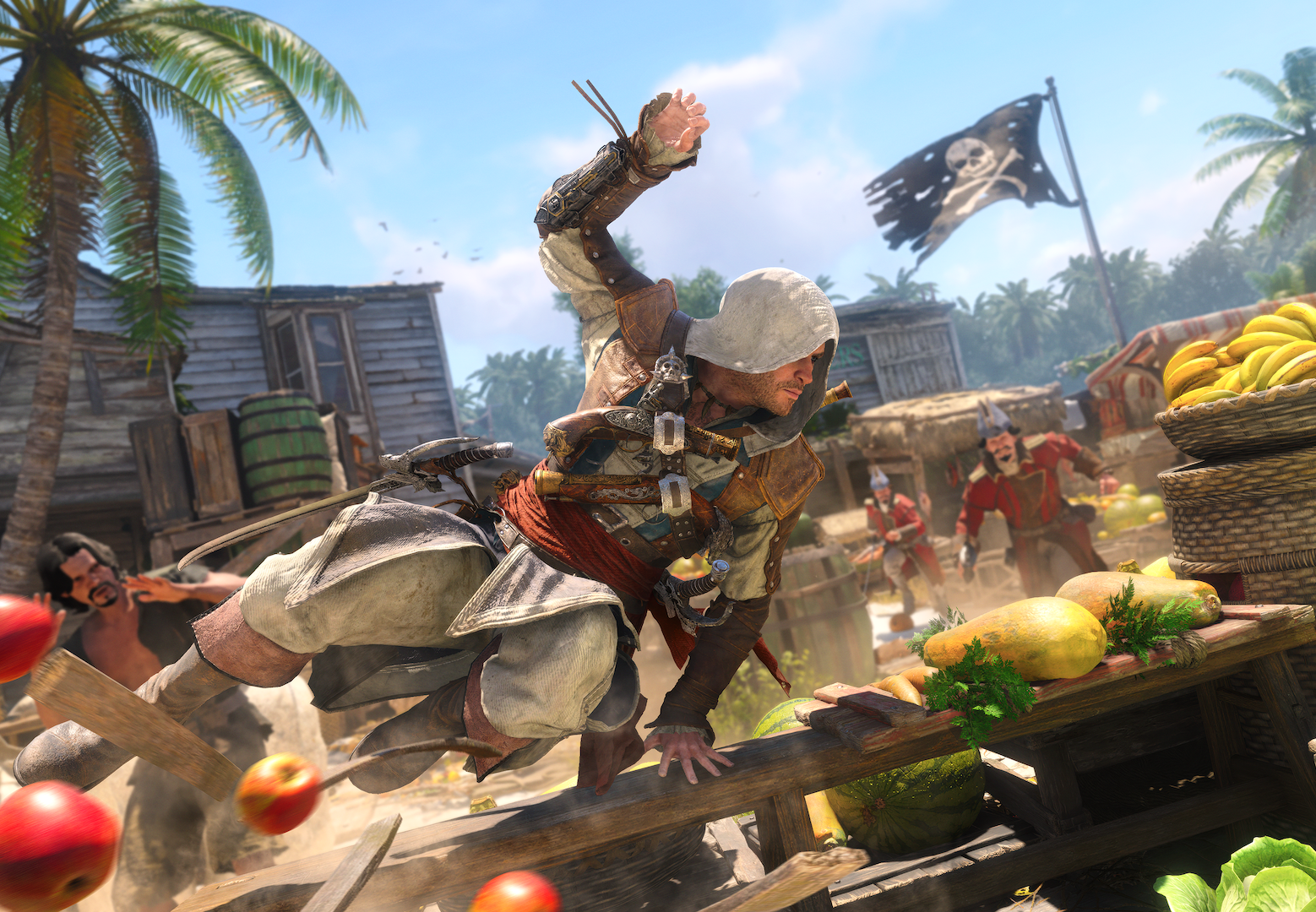
Ubisoft’s resident historian, Thierry Noël, talks to us about capturing the small details, historical accuracy and bringing more of the past to life in Assassin’s Creed Black Flag Resynced
Since 2007 the Assassin’s Creed series of videogames have been sending players back in time to experience incredibly recreated historical cities and locations. From Jerusalem to Boston and from Kyoto to the Caribbean, the series had brought historical settings to life and set players loose in a playground of action and adventure. One of the best and most beloved examples of this was Assassin’s Creed IV: Black Flag, originally released in 2013, which is now returning with a revamped and upgraded look for Assassin’s Creed Black Flag Resynced.
We sat down with Ubisoft Senior Inspirational Content Manager – Humanities and Inspiration Team Lead Thierry Noël to learn more about the game-makers’ approach to historical accuracy, bringing the past to life and finding fun characters from historical figures.

How would you describe the overall approach of the Assassin’s Creed series to depicting history?
Thierry Noël: We perfectly know we make a video game – an action and adventure game. And the idea is not to try to recreate a museum exhibit, which are great, but are not the purpose here, obviously.
The idea is to try to recreate a period in a way that people can connect with and can discover it. Not necessarily in terms of pure accuracy, but more in a way to discover a period through different experiences, such as walking the streets of places, or being on a boat, a ship, like in Black Flag. To hear different languages, hear accents, witness major events, meet historical characters.
And what is most important for us is to meet and connect with the daily life of the period, and what must have been the life in the period in a broader cultural sense. From the most slight details of daily life to the deep cultural elements, values, legacies, perceptions, and lives. So that’s globally the idea of the approach we have: to offer that kind of experience. Of course, with the idea of having an experience in action and adventure in all of that setting.
How important is historical accuracy and what do you do to make sure you get the details right?
Yes, yes, absolutely. Details and all the small elements are part of a bigger picture that we connect and we do brick by brick, element by element. We go about connecting all the material details, but also non-material culture. We work on all the cultural aspects that were part of a society or a period. Even the most invisible ones, or the ones that have not been explored.
The global idea of all of this is to be authentic. We do not pretend to be 100 percent accurate. It would be probably impossible to do so, and we perfectly know that we are building virtual worlds. But the idea is to bring the most authentic period possible.
Obviously, you have to build it on a grounded base of historical research in the most detailed way. To give you an example for what was done for Black Flag, but also for Resynced, is to explore any archive possible of the period, to bring every detail that we might need to the game. It’s an open world, it’s a full, open experience, so you get to experience everything of daily life.
Getting to walk around these worlds and soak up the atmosphere and architecture is really fun, but is that born from being able to do that in these real historical cities, like Istanbul and Florence that have appeared in the series?
Yes, this is totally something that we try to do as much as possible, to do field exploration, because it always brings you something different, something that you cannot see from a distance.
Let’s be honest, we can find a lot of elements of archives on the internet, on the web. We can work at a distance with the experts, with historians, architects, art historians, linguists, and every kind of external expertise. But going to the place itself always brings something different. Even if it’s a world that has disappeared a long, long, long time ago, just the feeling of being there – the noise, the light of the sun, or the starry night – it always brings something that makes the difference.
Have new game mechanics ever emerged thanks to historical input?
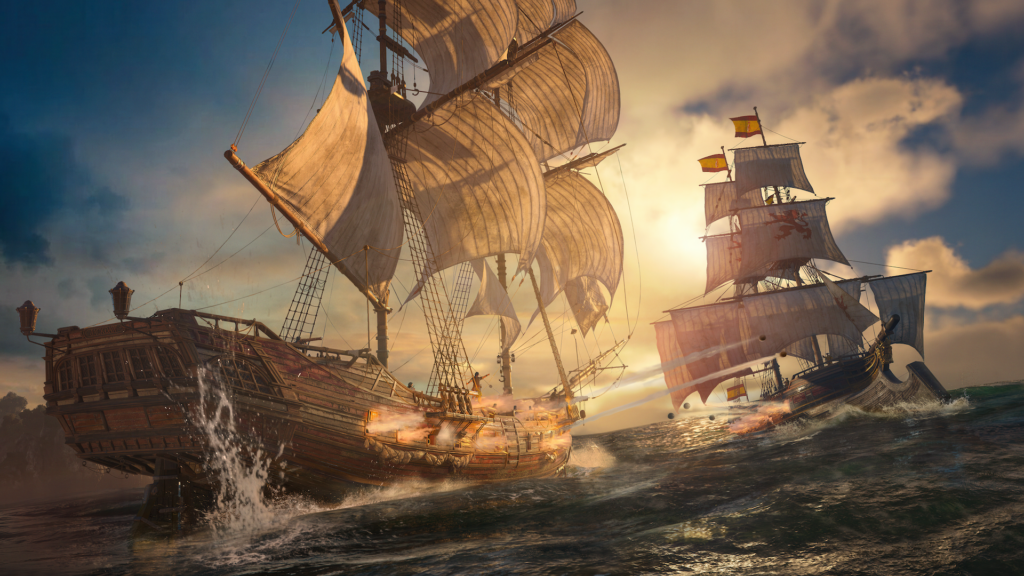
Oh, I think Black Flag is the best example. It’s a very basic example. One could say that we build a mechanic – a game mechanic or a gameplay mechanic – and then we adapt it to the setting. In the case of Black Flag, we have a perfect example of a setting itself that produced its own gameplay.
Naval exploration was obvious as a central pillar of the experience at the moment Black Flag was developed. And obviously, at the moment we did Resynced, we knew that it was the core experience of it. There was so much to say, not only in seafaring, but all the elements it includes in seafaring: the life aboard the ships, the connection with other ships, the interaction with other ships (that can sometimes be violent!), exploring, looking for the islands, trying to navigate. You know, all that life, all the life that is a part of seafaring. Naval exploration was, and had to be, the core experience of it. And from this, we could create this central gameplay and all the kinds of gameplay we needed for the game.
Why do you think historical periods, like the age of pirates in Assassin’s Creed IV: Black Flag, make for such engaging stories?
Pirates speak for themselves. We’re talking about action, about adventure, about fears too and everything that can happen in that kind of open world that has still to be discovered, still to be organised. So, I think it’s something that can still mean a lot to us.
At the same time, it’s very distant from us and from our daily life. Most of us are not living that kind of action and adventurous life. But at the same time, it’s very familiar. These are still topics that we want to explore, that we want to experience, and to live, which makes the world of pirates fascinating.
Are there any particular elements of the history in Black Flag that you’re particularly proud of having in the game?
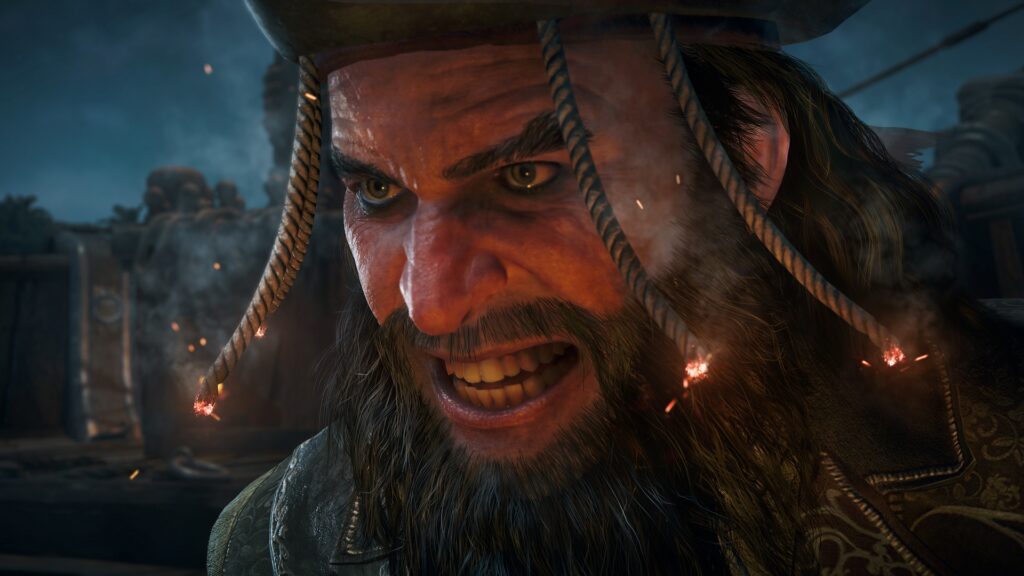
Well, obviously, all the interaction with historical characters. Historical characters that we try not to present only as legend and myth. I mean, Blackbeard, yes, it is a myth. Anne Bonny, Mary Read, they are mythical, legendary figures. But we also try to provide them some historical background, to historicise them, as much as we know from the sources, how it was. But we try to give them a human touch too, which makes them more manageable for us.
And in general, how we try to represent what must have been the life of a pirate in the Caribbean of the period, all the experiences of different communities that were those communities of pirates, which are something quite unique in history.
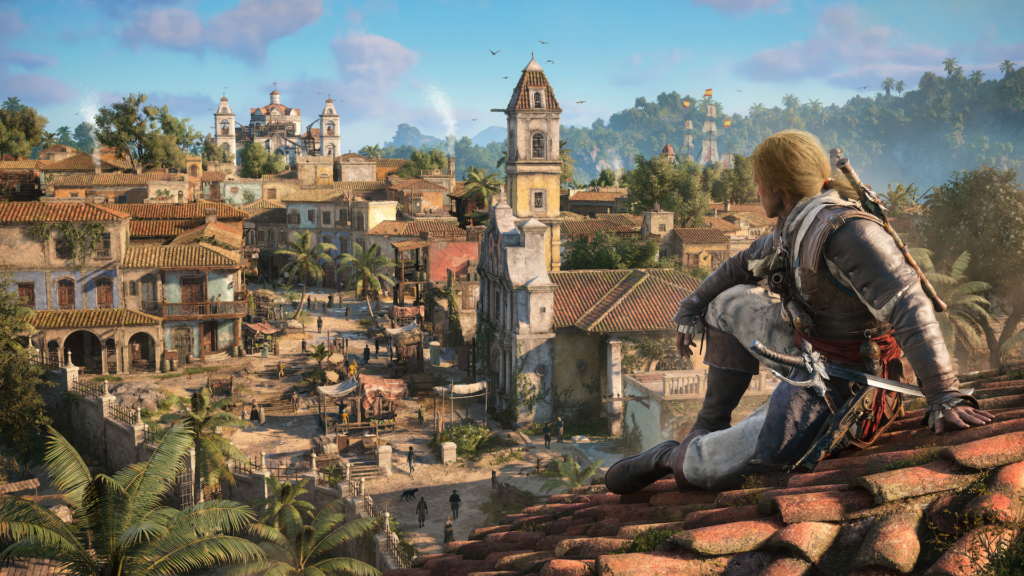
Also, all the work that has been done to recreate the setting itself. You were mentioning all the buildings, trying to recreate what was Nassau, what was Havana, or Kingston of the period. What you could see, what you could feel, what you could find in the streets, also in that kind of exploration. To me, this is the global historical experience and achievements that we try to make.
I want to insist on the fact that the teams who did Black Flag at the beginning did a great and incredible work of research at the moment, and that we tried to enhance it, to provide more details. We just had an excellent base on it, and we tried to provide more elements and to deepen the quality of the experience.
The Assassin’s Creed games have always found fascinating historical figures to draw from, but was that particularly true of Black Flag with pirates?
Absolutely. And that’s why we also tried to develop the character of Robert Maynard, who killed Blackbeard. Because we had these huge historical characters, it was interesting also to introduce lesser-known ones like him. We could also bring lesser-known persons like Robert Maynard and give him perhaps more content, more importance also.
Could you tell us a little more about the new content in Assassin’s Creed Black Flag Resynced that history lovers might appreciate?
Oh, yes, I think as I mentioned, there was already a beautiful historical base that had been used to make Black Flag. So, we tried to enhance and deepen everything that was made before. You will have more interactions with historical characters, more content in terms of naval exploration and all the opportunities of seafaring, and all the experience of seafaring and finding your way, experiencing storms and any elements that can happen.
I think it’s no exaggeration to say that it is absolutely beautiful. It’s part of the experience to be on a ship and to see the night sky, and the day too, and all the changes in the climate and all that made the period and the experience on the ships.
So, you’ll have all those details, and obviously, we also worked on the details as we mentioned, on all the buildings to have it with much more fidelity because we can have the new technologies that make the experience even better.
The attention to detail in this game was already good when Black Flag originally came out. The sea shanties of your crew are a great example of this.
Absolutely. It’s part of the experience, the shanties. We also used them on Odyssey, another of our games. It has now been part of the experience that you have those songs, those funny songs too, to sing along while you’re playing the game. And it’s part of it, it’s absolutely part of the experience.
Any final thoughts you would like to share with our readers?
As always, we want people to enjoy the experience. And as a historian, as mentioned before, we want people to have an authentic experience, even if not entirely accurate. But every time we make an adaptation or adjustment to history, it’s for the good of the game, for the benefit of the story.
And I think in that case, people will really enjoy it because it’s a very strong experience to live the pirate way. And we know, once again as a historian, that people will start to read, to go further in their experience, to learn about pirates, to read books about pirates, to see documentaries about pirates. So, there’s also, as a historian, the benefit of seeing that we are in some way spreading the love for history, which is always good. It’s good feedback to know that people have learned something or have had the urge to learn something about the period.

Assassin’s Creed Black Flag Resynced is available from 9 July 2026 on PlayStation 5, Xbox Series X/S and PC via Ubosoft Store, Steam and Epic Games Store

Jonathan is the Editor of All About History magazine, running the day to day operations of the brand. He has a Bachelor’s degree in History from the University of Leeds. He has previously worked as Editor of video game magazines games™ and X-ONE and tech magazines iCreate and Apps.
Subscribe to
All About History now for amazing savings!

Follow All About History on…