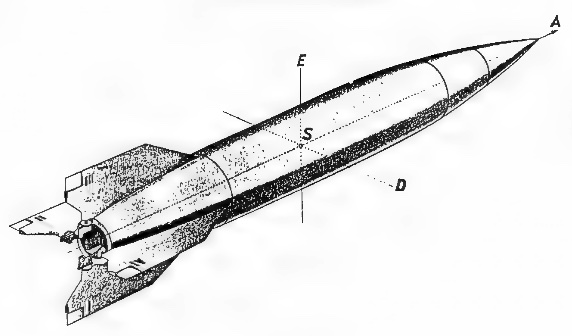
The V2 was one of the deadliest weapons of the Second World War – so just how was one smuggled out of occupied Poland, all the way to the British isles?
During the Second World War, across Great Britain, the civilian population lived in terror of German bombing raids. But nothing was as horrifying or as deadly as the infamous V Weapons. Whilst the V1 resembled a small aircraft, lacking a pilot and powered by a Pulsejet engine, the V2 was a rocket, a missile capable of travelling at supersonic speeds. The first V2 fell on London on the 8th September 1944 and its use horrified the allies. To defeat this deadly new weapon – the allies knew that first they must examine one. Now, Historian Guy Walters has retold the miraculous story of how the Polish Home Army was able to recover a V2, in his book Stealing Hitler’s Rocket. Ahead of his appearance at Chelsea History Festival, Guy spoke to us about this extraordinary story…
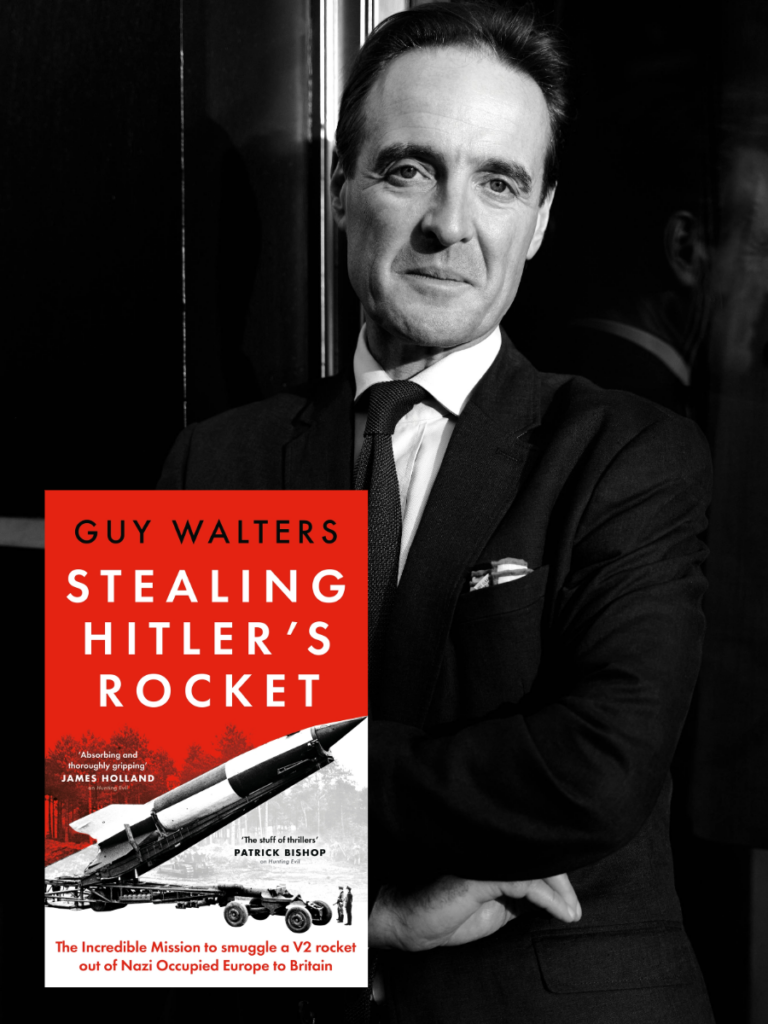
What drew you to investigating this story of the Polish Home Army retrieving a prototype V2 rocket?
It was a complete accident. I’d been in a TV series called Hitler’s Secret Missions. I was looking around for missions involving subterfuge, daring do, almost boy’s own stuff. I came across this extraordinary story about the Polish Home Army smuggling a V2 out of occupied Poland during the war. I then went, “okay, well, that sounds more than just a one-off TV episode. That is a book!” And so I said to my publisher, “I know I’m meant to be doing this other book for you, but I’ve got a different book I want to do, and I want to do it first.” He said, “send me a paragraph,” read it and said, “Yeah, let’s do it.” So that is how Stealing Hitler’s Rocket came about.
What made the V2 even more threatening than the V1 rockets?
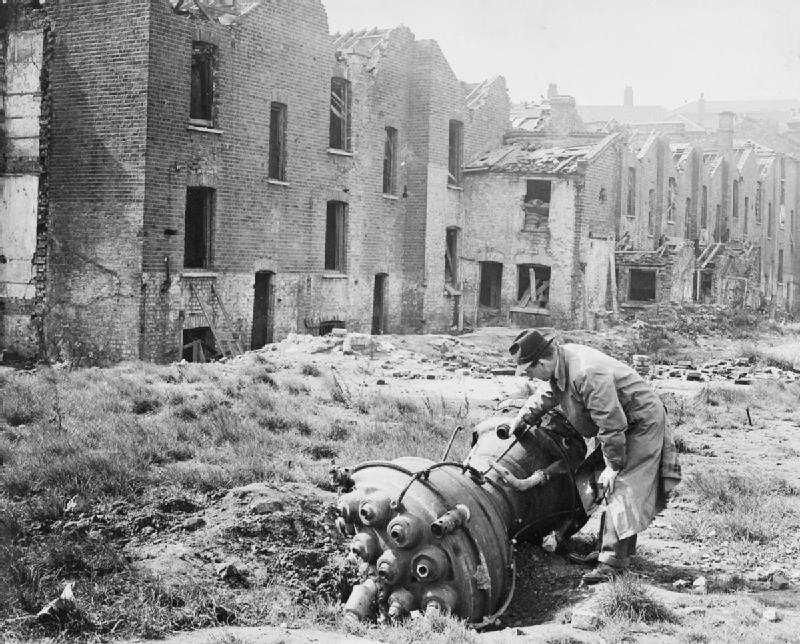
I’m literally not a rocket scientist but the V1 was essentially the world’s first cruise missile and basically a drone. It was a pilotless aircraft equipped with high explosive that traveled at a few hundred miles an hour. Then, when it ran out of fuel, it would drop down and explode. Obviously, it wasn’t remotely guided, but a V1 is a deadly weapon.You can shoot it down if you fire enough anti-aircraft shots into the sky and, if you have a plane fast enough, like a Typhoon or a later Spitfire, you can fly alongside it and flip it with your wings to make it crash. The V2 is a rocket that travels at thousands of miles an hour. You cannot intercept it. You can’t do anything about it. There is no anti-aircraft gun that can shoot [it] down. It is simply impossible.
It seems clear that the Allies would want to know more about the V2, but how important was it to get their hands on one?
We knew about V2 rockets. We bombed the hell out of where they were being built and researched at Peenemünde on the Baltic, on the north coast of Germany. They were testing these rockets and crash landing them into the water. The Germans then moved their testing facilities to occupied Poland. What the Allies needed to know was – they knew it existed, they knew it was hypersonic – was there a guidance system? This is super important, because if there’s a guidance system, obviously that’s going to be controlled by radio, and we can jam it. And if we can jam it, we can stop it. But, we had no idea if there was a guidance system. If there isn’t one, that’s bad news on one level because it means we can’t jam it, but it’s good news on another level because we don’t have to worry and waste resources into developing a radio-jamming operation, tying up tons of scientists and money into developing that.
What can you tell us about the operation?
People are risking their lives. So what happens: Spring 1944, these rockets are flying roughly for about 200 miles from Southern Poland to the middle of Poland. Obviously, these disintegrated when they landed. Then there was a race between the Germans and the Poles to recover all the bits and pieces. [There’s] a little village nearby called Sarnaki and a rocket lands into the marsh by the Bug River almost entirely intact. It’s discovered by the locals, and they think, “Okay, we have got this entire several-meter-long rocket, several tons of it. What the hell are we going to do with that?” But of course, like a thriller, the Germans are trying to find it as well. The Poles in 1944 did not have cranes and heavy equipment, they had to hide [the rocket] with reeds and shrubs and hope that the Germans wouldn’t find it – and they didn’t!
So great, okay, now you’ve got a V2 rocket – what are you going to do next? Well, they dismantled it secretly, took it apart and hid it in barns. A lot of the components were taken to Warsaw, where they were studied for things like a guidance system, what the fuel types were, what the motor was; etc. Technical drawings are made and so on and so forth. And then all this information is relayed back to the Brits, and the Brits go, “This is bloody great. Well done, chaps. We’d like it, please.” “What? You want us to get this rocket out?” “Yes, we do.” “Okay, we will work out how we’re going to do that for you.” And of course I tell this story in the book, of how they got the best part of a V2 rocket from central Poland all the way to the research establishment at Farnborough in Surrey.
Did the Germans ever realise that the Poles had managed to conceal and extract one of their rockets?
It’s really unclear, but they must have known that this rocket had gone missing. They were meticulous about recording their launches. They obviously knew that this rocket had gone missing. They hadn’t recovered any parts of it. They weren’t launching 20 rockets a day; they were launching a rocket every few days. They were on the lookout for it. Again, it’s like something out of a thriller, because to [smuggle it out], the various parts are placed in canisters on a lorry, and the Polish Resistance disguise themselves as German soldiers! The idea that this is a true story, it’s extraordinary, but it really is. And they smuggled the pieces of rocket hundreds of miles through Poland.
Presumably this is just one of many examples of Polish resistance aiding the Allies. Could you speak a little to their overall contribution to the war effort?
There are people better placed to talk about that, but I think the point I really try to get across is the fact that the Poles did an enormous amount during the war. Partly thanks to the Poles we were able to crack Enigma; the V2 operation and received countless intelligence reports about the [concentration] camps being built on Polish soil relayed back to Britain. The Polish government was based in London, and so there was a very, very close relationship between the British, and the Poles. For some people, the Polish war story is that they were invaded in five minutes by the Nazis and the Soviets. The Poles fought all the way through the war. Of course they were going to be crushed by the combined might of the Soviet Union and Nazi Germany in 1939. But that fighting spirit you still see in Poland today with their standing up to potential enemies on their doorstep. I think stories like the rocket, Enigma, intelligence – the actions of the Home Army are absolutely brilliant and redoubtable and brave and should not be glossed over and ignored.
What do you hope readers take away from reading Stealing Hitler’s Rocket?
You always think the bones of the Second World War are being picked clean and there’s never another story to emerge. Was this story known about? Yes. But how many people know about it? Not a lot. I really want more people to know about it, because it’s important and a correction that the Polish war experience was basically one of defeat. It wasn’t. I also want people to take away from it the fact that sometimes, I know it’s a cliché, but truth can be stranger than fiction.
Guy Walters will be speaking at Chelsea History Festival On Saturday 3rd October. Tickets and further details can be found here.
Subscribe to
All About History now for amazing savings!